Skip to content
Whale Watching in Campbell River

Marine Wildlife of Campbell River

A field guide to the whales, dolphins, porpoises, seals, sea lions and shoreline wildlife you may meet in Discovery Passage and the Discovery Islands, with tips on what to look for and when.

Species guide

Showing 13 of 13 species

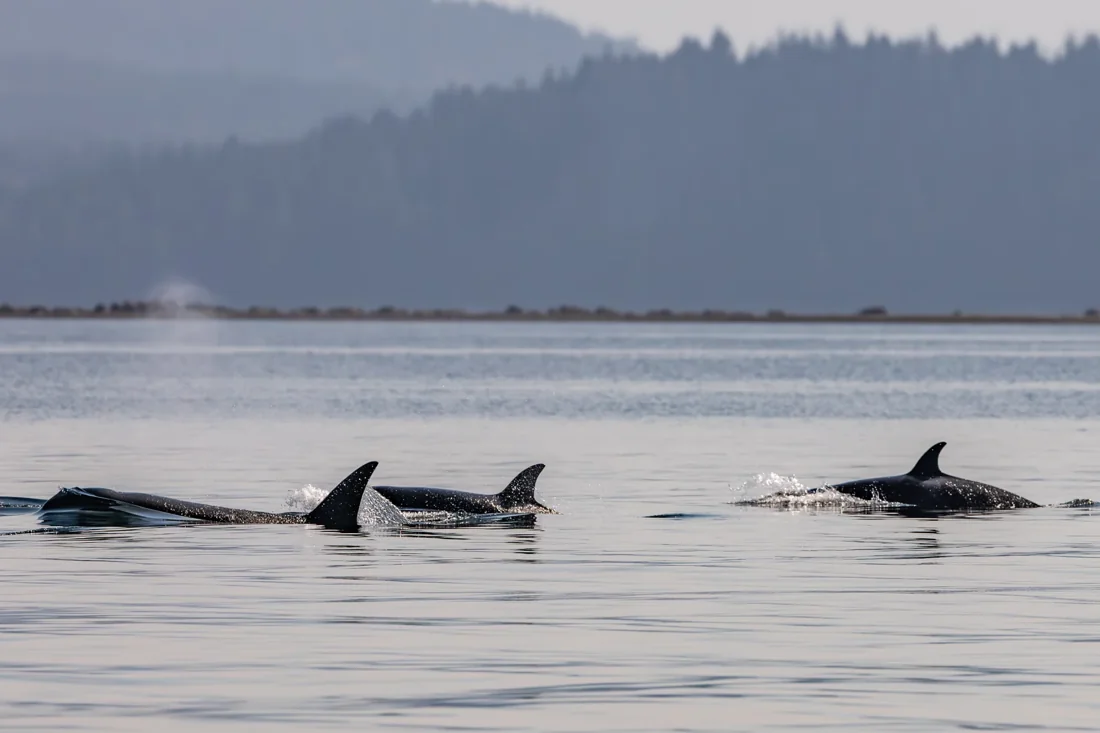
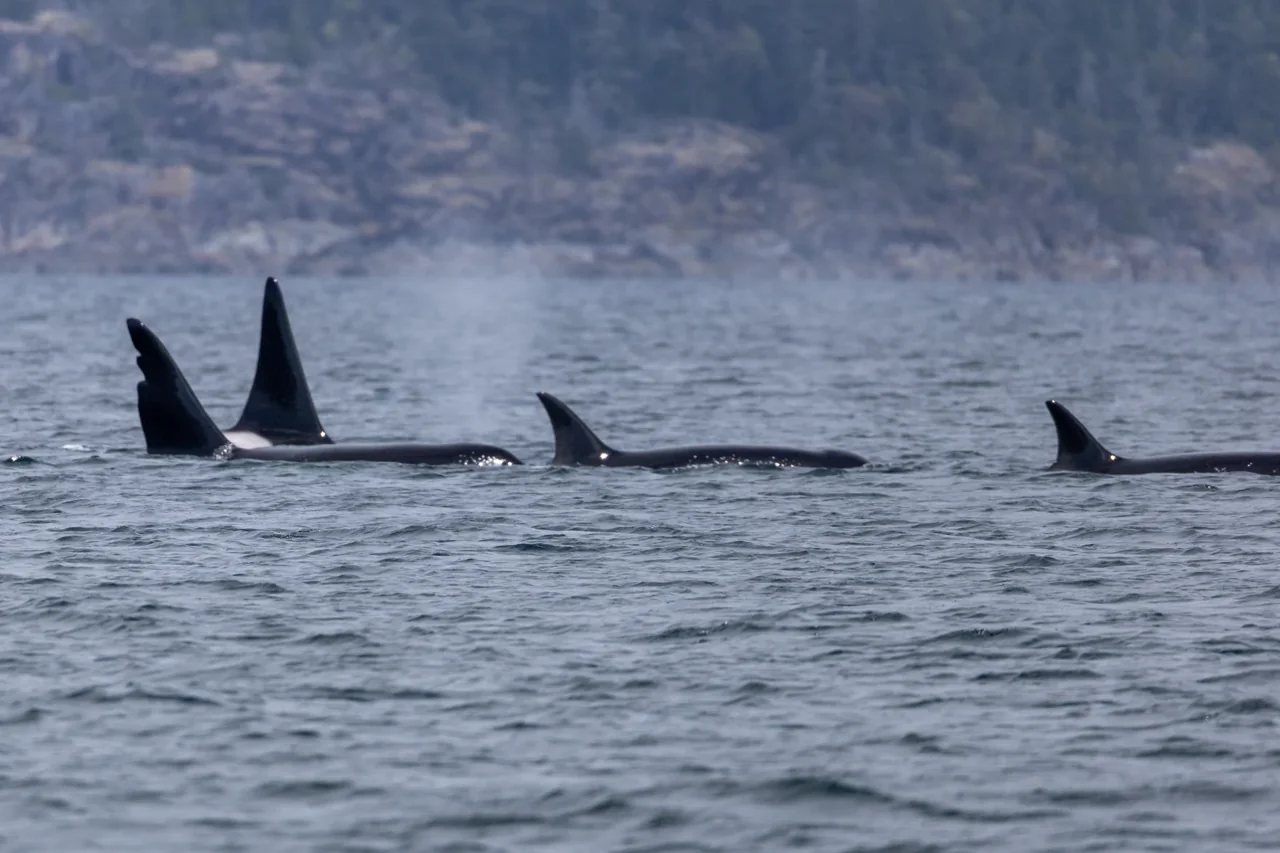
Orca dorsal fins surfacing together near a forested shoreline

Whales

Bigg’s killer whale

Orcinus orca

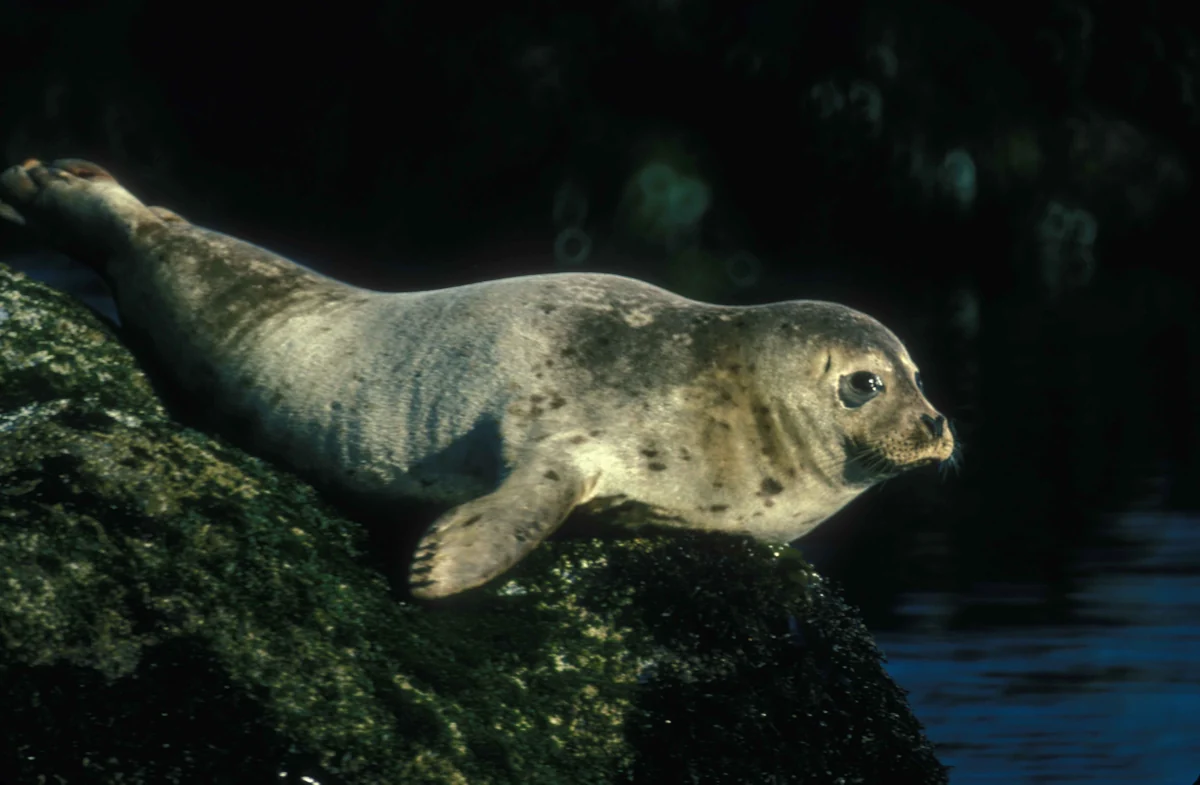
This killer whale ecotype hunts marine mammals, including harbour seals and porpoises. It may travel in small groups through inside waters.

Look for
A tall dark dorsal fin, a white eye patch and a saddle patch behind the fin. The ecotype takes more evidence to identify.
When
Possible year-round.
Killer whales surfacing in a line

Whales

Northern Resident killer whale

Orcinus orca

A fish-eating killer whale population that follows salmon and uses Johnstone Strait, among other coastal waters.

Look for
Multiple dorsal fins travelling or foraging in the same area. Guides use known individuals and markings to confirm the group.
When
Summer and fall are useful times to learn about their use of Johnstone Strait.
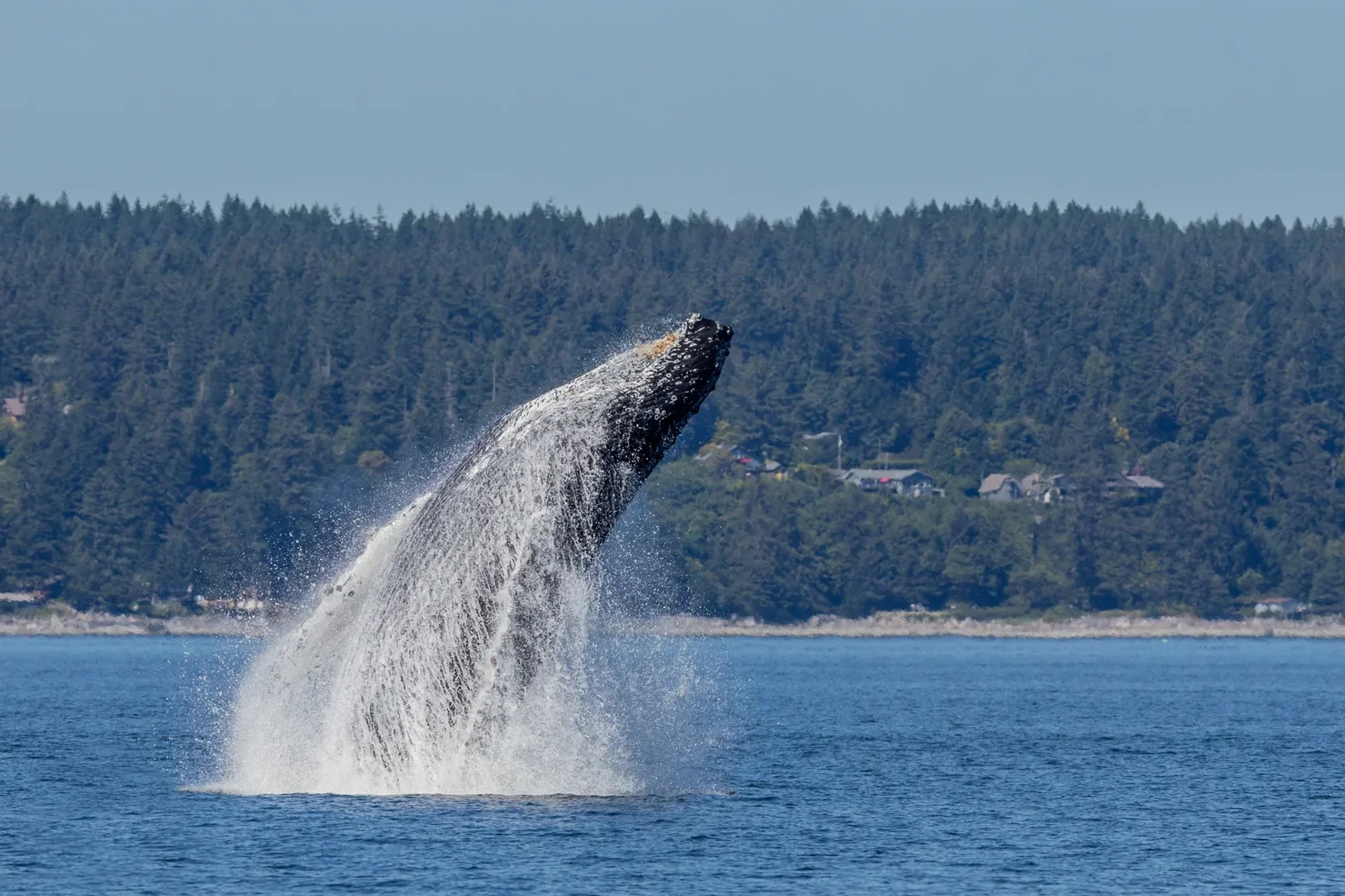
A humpback whale breaching in a curtain of spray

Whales

Humpback whale

Megaptera novaeangliae

A large baleen whale that feeds in British Columbia’s coastal waters on small schooling fish and krill.

Look for
A tall blow, long pectoral fins or a broad tail lifting before a dive.
When
Coastal feeding season spans the warmer months and can extend into fall.
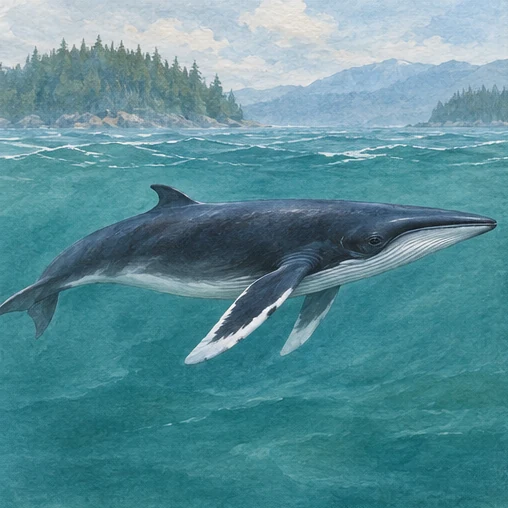
Illustration of a minke whale with a pointed snout and white flipper markings

Whales

Minke whale

Balaenoptera acutorostrata

A compact baleen whale that surfaces briefly and can be difficult to track in choppy water.

Look for
A pointed head, small curved dorsal fin and pale bands on the flippers when visible.
When
Occasional in local waters.
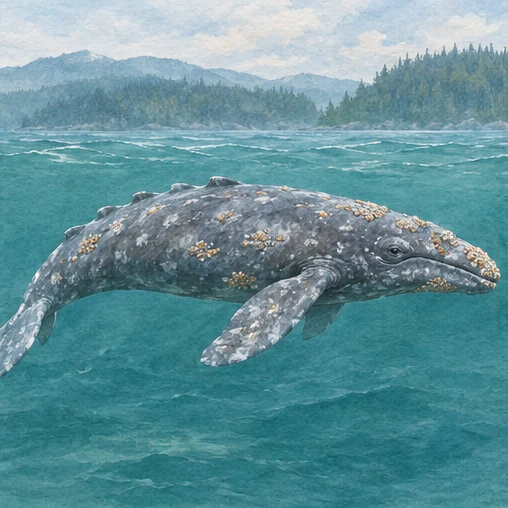
Illustration of a grey whale with mottled skin and dorsal knuckles

Whales

Grey whale

Eschrichtius robustus

Most migrating grey whales travel along the outer coast of Vancouver Island. An individual can turn up in inside waters.

Look for
Mottled grey skin, barnacles and a row of bumps along the back in place of a dorsal fin.
When
Occasional in inside waters during migration.
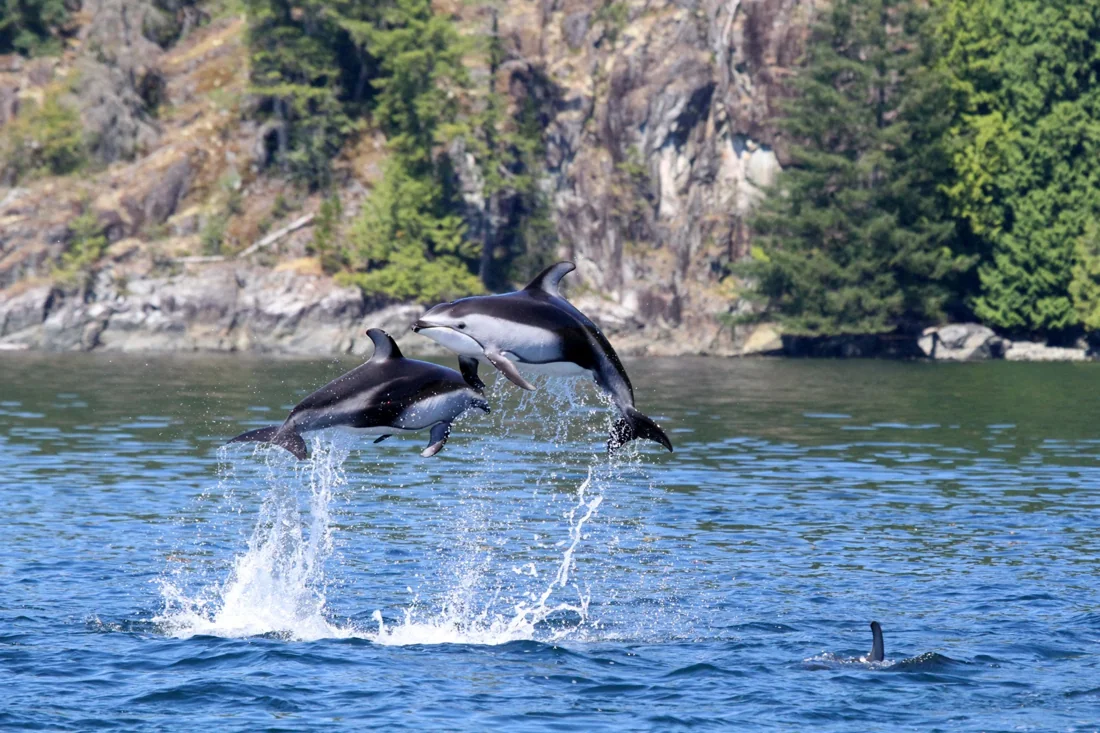
Pacific white-sided dolphins breaking the surface

Dolphins & porpoises

Pacific white-sided dolphin

Lagenorhynchus obliquidens

A fast, social dolphin that sometimes travels in large groups and leaps clear of the water.

Look for
Curved two-toned dorsal fin, pale flank streaks and energetic leaps.
When
Possible across multiple seasons.
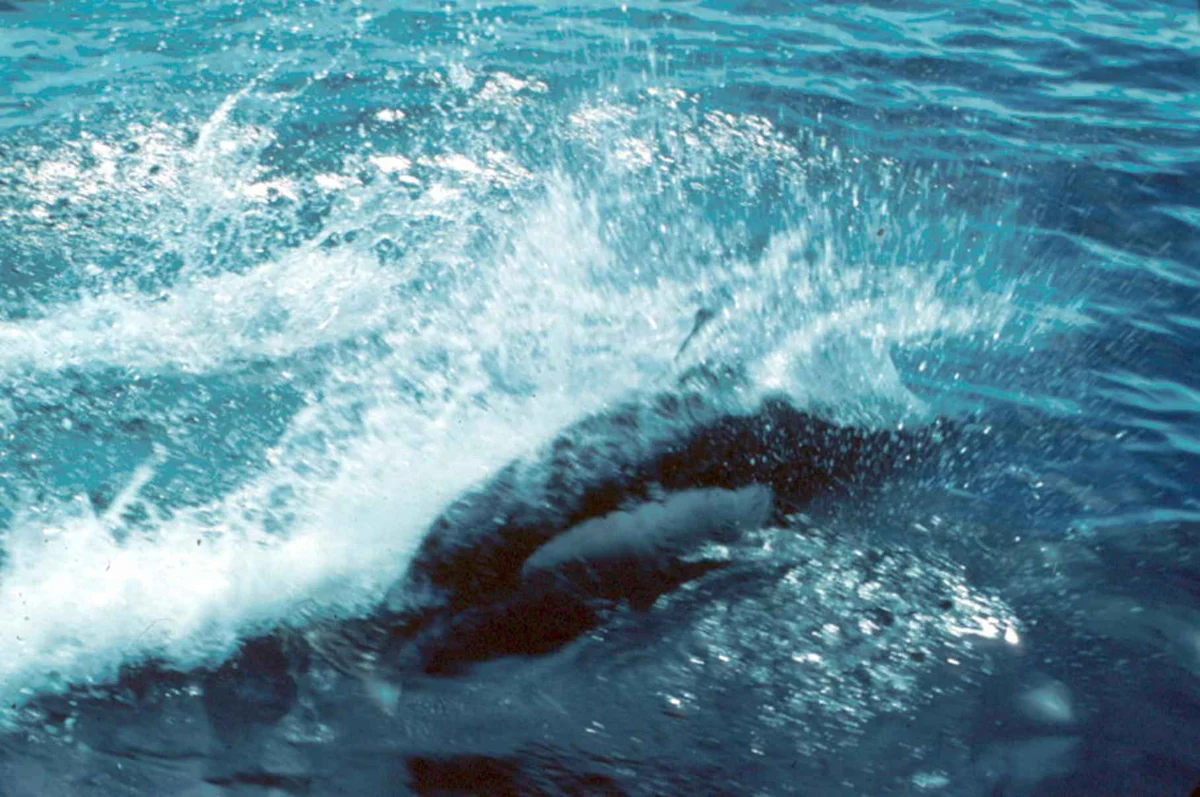
A black-and-white Dall’s porpoise surfacing amid a trail of spray

Dolphins & porpoises

Dall’s porpoise

Phocoenoides dalli

A stocky, fast-swimming porpoise that can throw up a V-shaped spray as it breaks the surface.

Look for
High contrast black and white markings and a distinctive rooster-tail splash at speed.
When
Possible across multiple seasons.
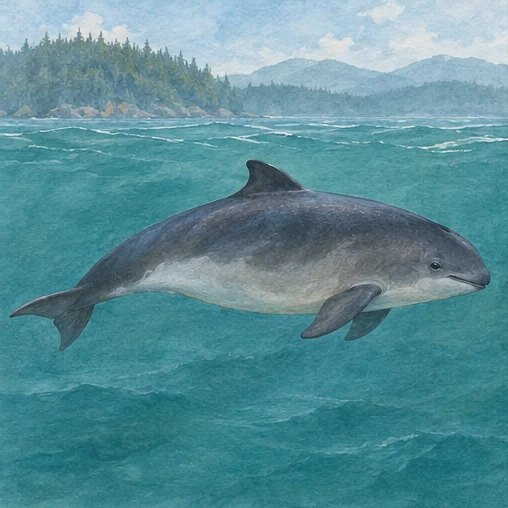
Illustration of a small grey harbour porpoise with a blunt head

Dolphins & porpoises

Harbour porpoise

Phocoena phocoena

A small porpoise that can pass with little splash. Calm water makes its brief surfacing easier to see.

Look for
A small triangular dorsal fin and a low roll at the surface.
When
Possible year-round.
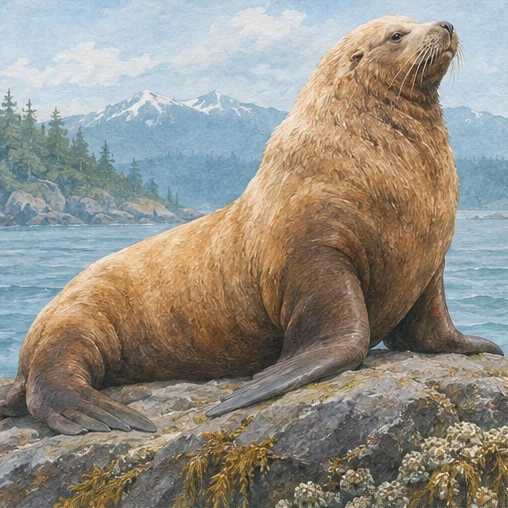
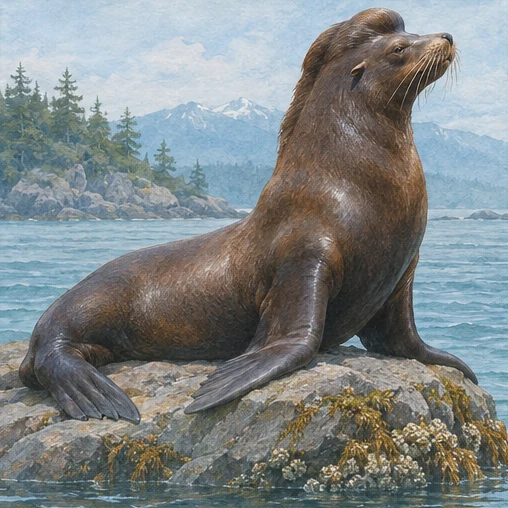
Illustration of a tawny Steller sea lion resting on rocks

Seals & sea lions

Steller sea lion

Eumetopias jubatus

A large sea lion that comes ashore to rest in groups. Adult males have thick necks and a heavy build.

Look for
Tawny colouring, broad shoulders and a low, throaty roar.
When
Haul-out numbers vary through the year.
Illustration of a dark brown California sea lion resting on rocks

Seals & sea lions

California sea lion

Zalophus californianus

California sea lions use BC waters, and can share haul-out sites with Steller sea lions.

Look for
A relatively slim build and, in mature males, a prominent forehead. Listen for barking.
When
Look for them especially outside the summer breeding season.
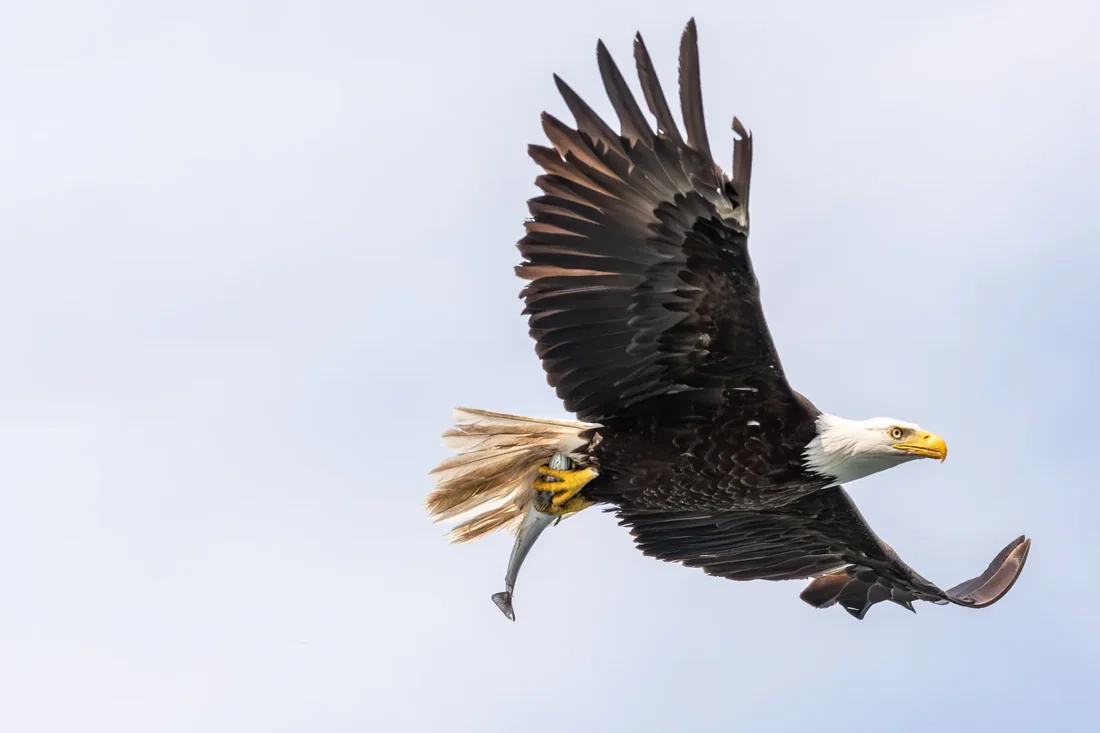
A bald eagle in flight carrying a fish

Birds & shoreline

Bald eagle

Haliaeetus leucocephalus

Bald eagles watch the water from coastal trees and feed on fish and other available prey.

Look for
A white head and tail on adults. Immature birds are mottled brown.
When
Possible year-round.
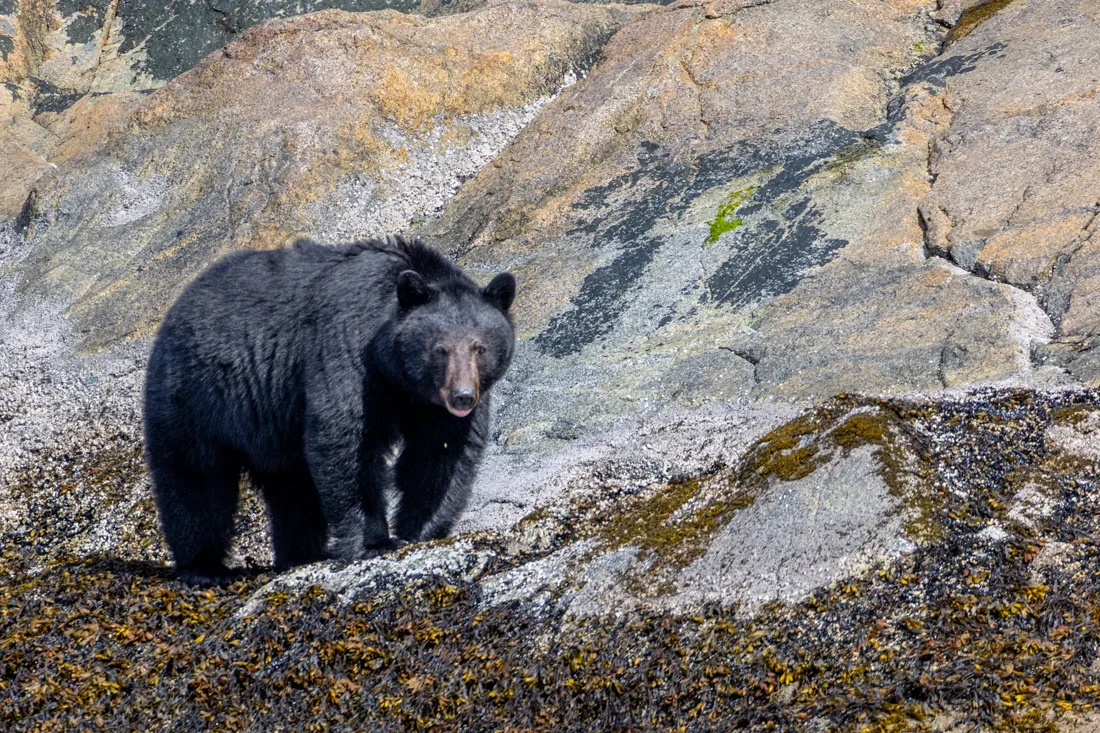
A black bear standing on a rocky shore

Birds & shoreline

Black bear

Ursus americanus

A black bear may come down to the tideline to forage. Watch forested beaches from the water at a distance.

Look for
A dark shape moving along the shore or turning over rocks at low tide.
When
Possible in spring through fall.

Orca ecotypes

Bigg’s vs. resident killer whales

Killer whales on the BC coast belong to distinct populations that rarely mix, eat different prey and behave very differently. Your naturalist can usually tell you which you’re watching.

FeatureBigg’s (transient)Northern Resident
DietSeals, sea lions, porpoises and other marine mammalsFish, especially Chinook salmon
BehaviourTravel quietly in small groups to avoid alerting preyLarger, vocal family groups that stay in contact while foraging
Near Campbell RiverPossible in any month in inside watersMainly Johnstone Strait, typically from late July into fall
Approach distance200 m200 m

See them with a naturalist

Both featured Eagle Eye Adventures tours are naturalist-led, searching Discovery Passage and the islands for whales and coastal wildlife.

6-Hour Whale Watching 4-Hour Wildlife Safari